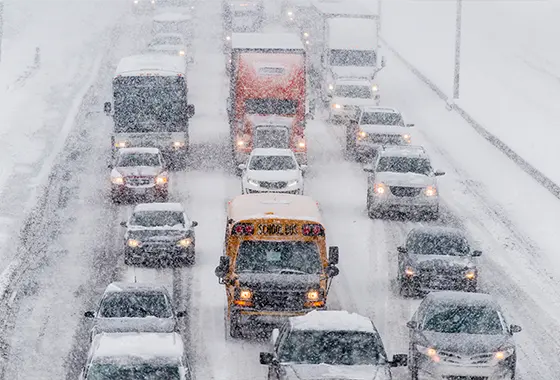
Snow, ice and early darkness reduce visibility and traction, and they leave drivers less room for error. Weather plays a large role in crashes: according to the Federal Highway Administration, an estimated 744,911 crashes each year are weather-related, about 12% of all motor vehicle crashes, and an average of 3,807 people are killed in them each year (2019–2023 data).
Many of those crashes come down to drivers not adjusting to conditions. Safe winter driving starts before the engine does, and it continues with the same habits drivers use the rest of the year, applied with more care.
Prepare Your Vehicle Before You Drive
Replace worn wiper blades, and make sure headlights, mirrors and the defroster all work. Before every trip, clear snow and ice from every window, mirror, light and the roof, so nothing blocks your view or blows onto the vehicle behind you.
Check tire pressure and tread, keep an eye on your brakes, and keep the fuel tank full. Carry an emergency kit with items like blankets, water, roadside flares and snow chains where they're needed. Check the forecast before you leave, put your phone away, buckle up and give yourself extra time.
1. Aim High in Steering®
Look at least 15 seconds ahead, to where you'll be. On winter roads, that eye-lead time gives you early warning when the drivers ahead swerve, brake suddenly or lose traction, and it leaves you time to slow down gradually instead of braking hard on a slippery surface.
2. Get the Big Picture®
Stay aware of everything around your vehicle, not just the road directly ahead. Check at least one mirror every 5 to 8 seconds, and increase your following distance in bad weather so the vehicle ahead doesn't block your view. Focus on the information that matters for driving safely and tune out what doesn't.
3. Keep Your Eyes Moving®
In heavy snow, it's easy to fix your eyes on the lane lines or the taillights ahead. Instead, keep your eyes moving every 2 seconds, scan your mirrors and the area around the vehicle, and scan every intersection before you enter it. Clean glass and working wipers make that scanning possible, so keep both clear throughout the trip.
4. Leave Yourself an Out®
The safest position in traffic is with few or no vehicles around you. On snow and ice, that space cushion is what gives you room to stop, steer around a problem or wait out another driver's mistake. Slow down, avoid tailgating, avoid sudden braking and signal early.
If your vehicle starts to hydroplane, don't panic. Avoid hard braking and sharp steering, ease off the accelerator and brake gently until you regain control. Most skids last only a few seconds.
5. Make Sure They See You®
Short days and falling snow make vehicles harder to see. Use your headlights whenever visibility or traction is reduced, signal and brake early, stay out of other drivers' blind spots and leave plenty of room when changing lanes. Seek eye contact with other road users, but don't take it as a guarantee they've seen you.
If a trip can wait until conditions improve, the safest choice is to wait.
Reinforce the Smith5Keys Before Winter Arrives
Winter conditions test the habits drivers already have. For fleets, the weeks before the first storm are a good time to review the Smith5Keys with drivers, so supervisors and drivers share the same language when conditions change. A supervisor who reminds a driver to "Leave Yourself an Out" on an icy morning means the same thing the driver learned in training.